Maradona
Myth & Reality
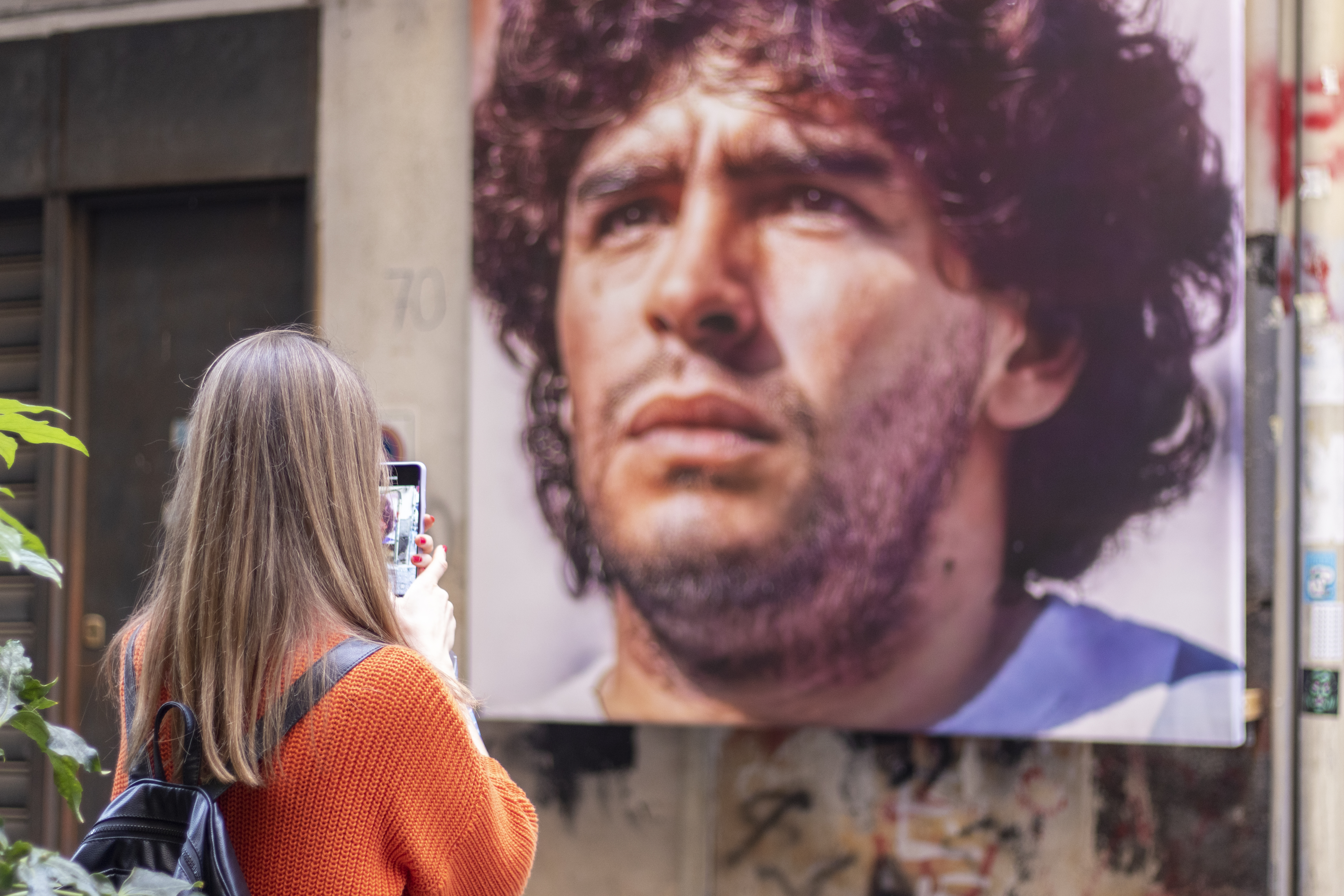
Diego Maradona was brilliance and contradiction in the same body — adored by the poor, scrutinized by the powerful, consumed by the spotlight. When he touched the ball with his left foot, the game opened up — as if football itself had gained another dimension — beautiful beyond logic. Off the pitch, he broke under the weight of expectation.
Episode 1: From Villa Fiorito into the World
Why Maradona became a myth so early
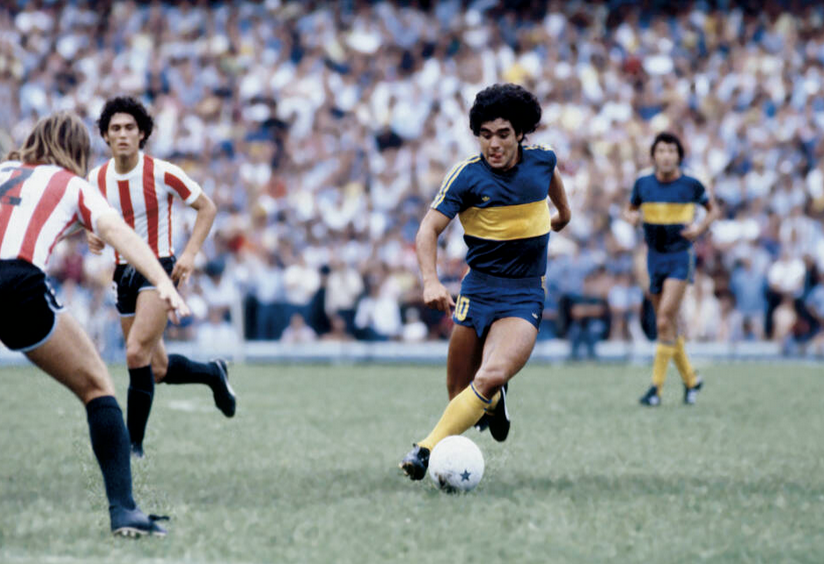
Episode 1 begins in Villa Fiorito, on the outskirts of Buenos Aires, where Diego Maradona grew up during a period shaped by Peronism, political instability and dictatorship. It follows his early rise from local pitches to national attention, including his absence from the 1978 World Cup and his breakthrough at the Youth World Championship. The episode explores how football functioned in Argentina not only as sport but as social mobility and political backdrop. Through archival material and voices such as Jorge Valdano, it examines how a young player became a national projection surface long before reaching his peak. It asks how myth begins — and why, in Maradona’s case, it began so early.
Episode 2: The Hand of God and the Goal of the Century
Why four minutes made Maradona a legend
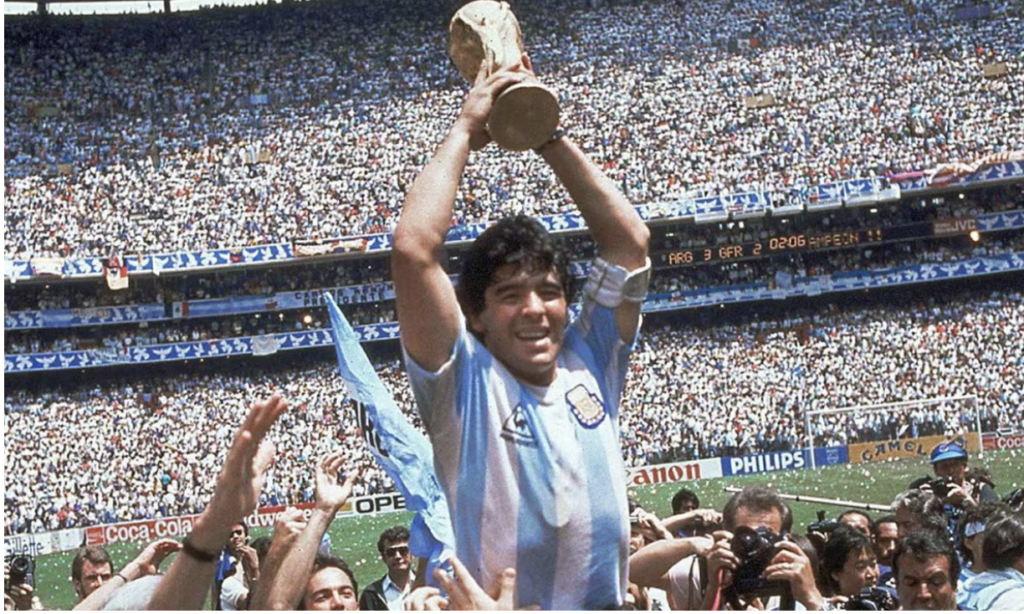
Episode 2 moves from Barcelona to Naples and to the 1986 World Cup in Mexico. It traces Maradona’s difficult years in Spain, his cultural isolation, injuries and media pressure, before following his transfer to Napoli, where he became a symbol of a city seeking recognition and dignity. The episode centers on the quarterfinal against England — four minutes that would define his global image. Through match analysis, media interpretation and political context, it explores how sport, geopolitics and spectacle converged. It examines how those goals transformed Maradona from exceptional player into international legend — and how expectation intensified from that moment on.
Episode 3: Excess – Downfall – Comeback
What remains of Maradona?
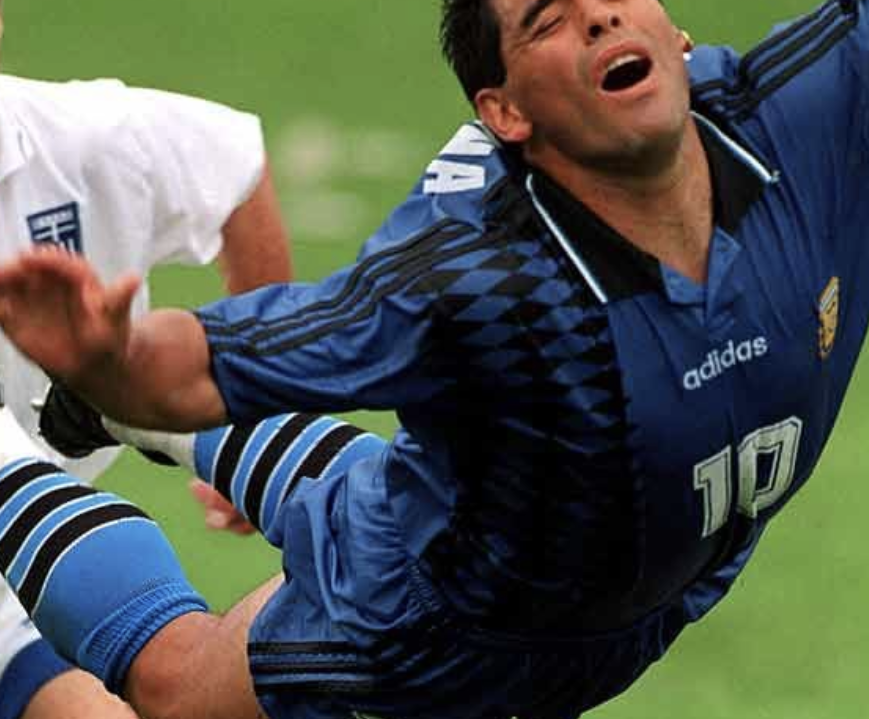
Episode 3 follows the years after the peak. From the 1990 World Cup to suspensions, addiction, attempted comebacks and his final appearances on the global stage, it traces a career increasingly shaped by scrutiny and self-destruction. The episode looks at Maradona as media figure, political voice and national symbol — someone who never fully separated private life from public role. Analysts reflect on how he was framed, judged and mythologized, and how he struggled under the weight of those narratives. It asks what remains today: the goals, the controversies, or the lasting cultural impact of a player who refused to disappear quietly.